

The European Neighbourhood Policy (ENP) governs the EU’s relations with 16 of the EU’s closest Eastern and Southern neighbours.
Eastern Partnership
The Eastern Partnership (EaP) is a specific Eastern dimension to the ENP that was launched in 2009. The aim of the partnership is to strenghten and deepen the political and economic relations between the European Union, its Member States and six Eastern European and South Caucasus ‘partner countries’: Armenia, Azerbaijan, Belarus, Georgia, Moldova and Ukraine.
The EaP supports the delivery of many global policy objectives, including the Paris Agreement on Climate Change and the UN 2030 Agenda and its Sustainable Development Goals. It contributes to the overall goal of increasing the stability, prosperity, and resilience of the EU’s neighbours as set out in the Global Strategy for the foreign and security policy of the European Union.
Over the years, the EaP has been instrumental in bringing the EU and its partner countries closer together. The EaP Summit of November 2017 marked a new approach with the adoption of the common reform agenda titled ‘20 Deliverables for 2020’. This ambitious work plan focused on delivering tangible results on the ground and improving the lives of people in four main policy areas: (1) stronger economy; (2) stronger governance; (3) stronger connectivity; and (4) stronger society – together with targets for the cross-cutting issues of gender, civil society, media and strategic communication.
Work on a successor agenda began in 2019 with a broad and inclusive consultation. The resulting Joint Communication: Eastern Partnership policy beyond 2020: Reinforcing Resilience – an Eastern Partnership that delivers for all and Council Conclusions on the Eastern Partnership policy beyond 2020 set out a new agenda for the partnership, with resilience as the overarching policy framework and five long-term policy objectives, acknowledged at the EaP Leaders’ video conference held in June 2020.
The EU, its Member States and the partner countries will work together on the following Eastern Partnership objectives:
- together for resilient, sustainable and integrated economies;
- together for accountable institutions, the rule of law and security;
- together towards environmental and climate resilience;
- together for a resilient digital transformation;
- together for resilient, gender-equal, fair and inclusive societies.
This new agenda has been further outlined in the Joint Staff Working Document: Recovery, Resilience and Reform: post-2020 Eastern Partnership priorities adopted in July 2021. The new Eastern Partnership agenda is structured around two pillars: investment – to be supported by a €2.3 billion Economic and Investment plan in grants, blending and guarantees, with a potential to mobilise up to €17 billion in public and private investments. The plan contains a set of flagship initiatives for each of the partner countries and a governance pillar to underpin and sustain our investments and help consolidate resilient and fair societies that leave no-one behind.
Top ten targets for 2025
As part of the agenda, a selection of top ten targets for 2025 have been identified as future priority actions:
- Investing in competitive and innovative economies – 500,000 SMEs supported
- Investing in the rule of law – All high level officials declare their economic assets and these declarations are verified
- Investing in sustainable and smart connectivity – 3,000 km of priority roads and railways built or upgraded
- Investing in people and knowledge societies – 70,000 individual mobility opportunities for students and staff, researchers, young people and youth workers
- Investing in security and cyber resilience – A strengthened framework in place for identifying and addressing hybrid threats; strengthened partners’ capacities to increase cyber resilience and tackle cyber crime
- Investing in sustainable energy – 250,000 households reduce energy consumption by at least 20%
- Investing in environment & climate – Another 3 million people gain access to safe water services; air quality monitored and improved in 300 cities
- Investing in health resilience – 850,000 health workers vaccinated and benefit from improved therapeutics, equipment and working conditions
- Investing in inclusive, gender equal and diverse societies, and strategic communication – 2,500 local civil society organisations, 120 independent media outlets and 2,000 journalists supported
- Investing in digital transformation – 80% of households have affordable access to high speed internet
Latest news
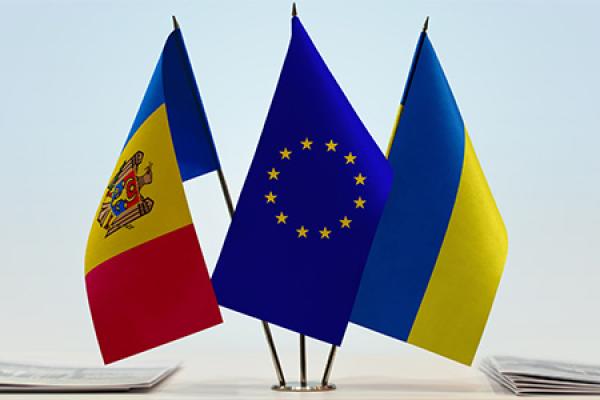
A new regional hub of the European Digital Media Observatory (EDMO) will support Ukraine and Moldova in fighting disinformation.
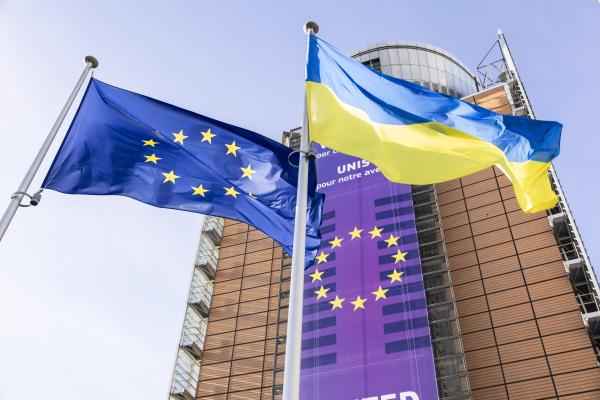
The Commission welcomes the adoption by the Council today of the Commission’s proposal to integrate Ukraine into the Roam Like at Home area as from 1 January 2026.
Together with Ukraine, the European Commission is announcing the BraveTech EU initiative,
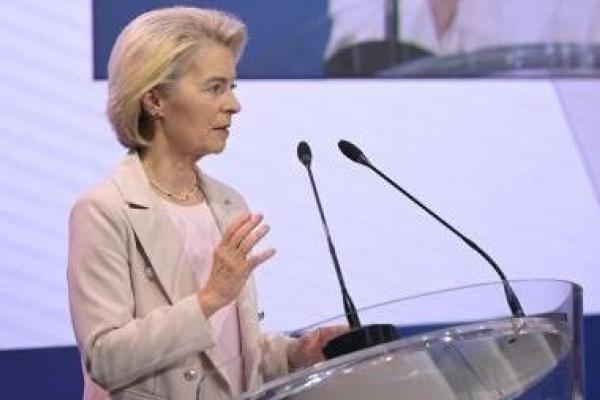
I remember well the first Ukraine Recovery Conference three years ago. It was just a few months after Russia unleashed destruction and bloodshed, on a scale not seen since the second world war. I remember the pain of the Ukrainian people.